
Delhi Police have arrested four individuals in connection with a daylight robbery near Azadpur Mandi, recovering a car purchased with the stolen money. The arrests followed an inter-state manhunt across Uttar Pradesh.

A man wanted for nearly nine years in connection with the murder of a woman for an alleged Rs 50 lakh insurance claim and property has been arrested in Bihar, Delhi Police said. Another accused in the case was found to have died in 2018.

A 30-year-old man, allegedly burdened by gambling debts, has been arrested for the murder of his wife and three young daughters in Delhi. He was apprehended in Rajasthan and confessed to the crime, citing financial pressure as the motive.

Delhi Police have arrested a man for allegedly murdering his wife and three daughters in their home. The accused was apprehended in Rajasthan and is being questioned.
A 42-year-old man has been arrested for allegedly killing his wife and three daughters in Delhi due to gambling debts. He was apprehended in Rajasthan after a multi-state manhunt.

A 34-year-old man died in police custody in Delhi after being detained for questioning. Police have launched an inquiry and preliminary reports suggest dehydration as a possible cause of death.
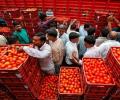
Tomato prices in the delhi markets surged to Rs 90 per kg as supplies have taken a hit due to monsoon rains lashing many states across the country, several vegetable vendors said on Tuesday. The rates of tomatoes have also gone up in the major wholesale vegetable markets of Delhi, including Azadpur Mandi, Ghazipur Mandi, and Okhla Sabzi Mandi. Several residents in the city expressed disappointment over the rising prices of tomatoes in their local markets and online retailing platforms.

Retail tomato prices declined 22.4 per cent month-on-month on improved supplies across the country, the Consumer Affairs Ministry said on Sunday. The all-India average retail price of tomatoes stood at Rs 52.35 per kg on November 14, down from Rs 67.50 per kg on October 14, according to an official statement. During the same period, modal wholesale prices at Delhi's Azadpur mandi witnessed a sharper decline of nearly 50 per cent to Rs 2,969 per quintal from Rs 5,883 per quintal, driven by increased arrivals.

Tomato prices are likely to touch Rs 300 per kilogram in the coming days and the prices of vegetables are also on the rise, according to wholesale traders. Kaushik, a member of Agricultural Produce Marketing Committee (APMC), said that vegetable wholesalers are facing losses as the sale of tomato, capsicum, and other seasonal vegetables has fallen drastically. He said that the prices of tomatoes have shot up to Rs 220 per kilo from Rs 160 per kilo in the wholesale market, owing to which retail prices can also go up.

"It is certainly affected. As you know the border is closed. The customers are coming in lesser number than before and so is the supply of goods into the market. There is a lack of supply and also a lack of buyers," vegetable wholesaler, Sumer Singh Saini told ANI when asked whether the business in the market is affected due to the agitation.

'Today I went to Asia's largest furniture market located in Kirti Nagar, Delhi and met the carpenter brothers. Apart from being hard workers, they are also amazing artists experts at carving durability and beauty,' Rahul tweeted.

In upmarket colonies, the bulb, a key ingredient in many Indian dishes, cost as high as Rs 70-80 a kg.

Tomato prices in retail markets of metro cities have shot up to Rs 72 per kilogram on tight supply due to unseasonal rains in key producing states like Madhya Pradesh and Maharashtra.

During this time of the year, potatoes and vegetables come from Punjab and Haryana.
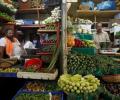
Not just onion, retail prices of potato and other vegetables have also shot up in the national capital on Monday as recent winter rainfall has damaged some of the crops. Milk and butter prices have also gone up. Even cooking oil prices, especially of mustard oil, have increased by Rs 15/kg litre.

Under this rule, traders will sell vegetables on alternate days in mandis. The government has also decided to stagger the timings for the sale of vegetables and fruits in these mandis.
Truckers stayed off the road for the second today, demanding lower diesel prices and permit fee, squeezing supplies of essential commodities that gave way to panic buying across markets.

'If the mandis were not working in Delhi, or the onion market in Nashik got affected, or there were disruptions because of unloading or loading in any sector in south India, we intervened.'

Tomato prices in the retail markets of the national capital declined to an average Rs 150 per kg on Monday from Rs 178 per kg on Sunday, according to the government data. However, e-commerce players such as Amazon, Big Basket and Otipy are selling tomatoes at Rs 170-190 per kg in Delhi-NCR. Blinkit is selling at Rs 138 per kg. The Centre is selling tomatoes at a subsidised rate of Rs 80 per kg in Delhi-NCR and some other cities through the National Cooperative Consumers' Federation of India (NCCF) and the National Agricultural Cooperative Marketing Federation of India (NAFED).

Parts of Uttar Pradesh, Haryana, and Punjab have also been impacted.

In a statement, the department of consumer affairs said about 18,000 kg of tomatoes were sold across Delhi-NCR to retail consumers.
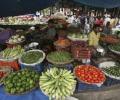
The forecast of deficient monsoon rainfalls scared farmers.
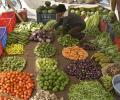
In most cases, however, retail consumers are paying higher prices in the absence of direct procurement from aggregator or farmers.
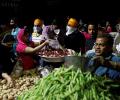
There have been several instances of traders dumping fruits and vegetables outside mandis. Or of farmers dumping produce outside their villages or feeding them to their animals.

The rates of peas, which were ruling at Rs 139 per kg last week, have come down to Rs 79 per kg.

Prices of the kitchen staple in Azadpur mandi, Asia's largest wholesale market, were ruling at Rs 60 per kg today as supplies were below normal.

In the coming weeks prices are expected to further cool down as new crop from Karnataka has started coming into the market.

A deficient rainfall season starts with heavy showers.

The COVID-19 active caseload remained below four lakh for the third consecutive day.

Farmers remained hesitant in sowing vegetable seeds in drought-hit areas.

The agriculture ministry also reiterated it is ready to find a "logical solution" to the issues raised by protesting farmer unions.

To give relief to Delhiites, the National Agricultural Cooperative Marketing Federation of India Ltd has started selling onions at Rs 55 a kg through its five retail outlets and two mobile vans in the national capital.

Retail prices across the country continued to be at Rs 80 a kg.

The prices of tomato are continuously moving up with the onset of monsoon due to strained supplies and higher wholesale prices in key producing states.

Onion supply to the city, which comes from Maharashtra, Rajasthan and Madhya Pradesh, is normal at 12,000 quintals in Azadpur, Asia's largest wholesale market, it added.

Prices of the key vegetable have also gone up in various cities.
Vegetable vendors and wholesalers have blamed rains for disruption in tomato supply, leading to the price of the kitchen staple skyrocketing in retail markets of the national capital. Local vendors are selling tomatoes in the price range of Rs 80 to Rs 120 per kg, depending on the quality and the localities. Anil Malhotra, a member of the Azadpur Agricultural Produce Marketing Committee (APMC), said tomato prices shoot up every monsoon but it was never this high.
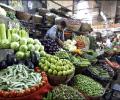
The southwest monsoon season was deficient by 16 per cent.

Currently, onion is being sold at Rs 36 per kg in retail markets of the national capital and Rs 32 per kg each in Mumbai, Kolkata and Chennai, according to the Consumer Affairs Ministry that monitors prices of 22 essential food items.

Price of ladies finger shot up staggering 236% at Vashi wholesale market last month.
